Thousands of people around the world share the same vivid memory: watching comedian Sinbad play a genie in a 1990s family movie called “Shazam.” They remember the plot, the costume, and even specific scenes. There’s just one problem: this Sinbad genie movie never existed.
This phenomenon represents one of the most compelling examples of the Mandela Effect, where large groups of people share identical false memories. The Sinbad genie movie mystery has sparked countless Reddit discussions, YouTube videos, and social media debates, with believers adamant they watched this film during their childhood.
The Mandela Effect Phenomenon at a Glance
| Key Facts | Details |
| • Origin of Name | Named after false memories of Nelson Mandela dying in prison in the 1980s |
| • Common Examples | Berenstein vs. Berenstain Bears, “Luke, I am your father” misquote |
| • Sinbad Case | Thousands believe they saw Sinbad as a genie in “Shazam” (1990s) |
| • Reality Check | No such movie exists; confusion likely stems from Shaq’s “Kazaam” (1996) |
| • Cultural Impact | Demonstrates how collective false memories form and persist |
The Mandela Effect gets its name from a widespread false memory about former South African President Nelson Mandela. Many people distinctly remember him dying in prison during the 1980s, complete with news coverage and funeral footage. In reality, Mandela was released from prison in 1990 and lived until 2013, serving as South Africa’s president from 1994 to 1999.
When huge numbers of individuals recall facts, events, or details differently than how they actually occurred, this psychological phenomena takes place. The Sinbad Shazam controversy has become one of the most documented cases, with believers providing incredibly specific details about a movie that simply doesn’t exist.
Has Sinbad Ever Played a Genie in a Movie?
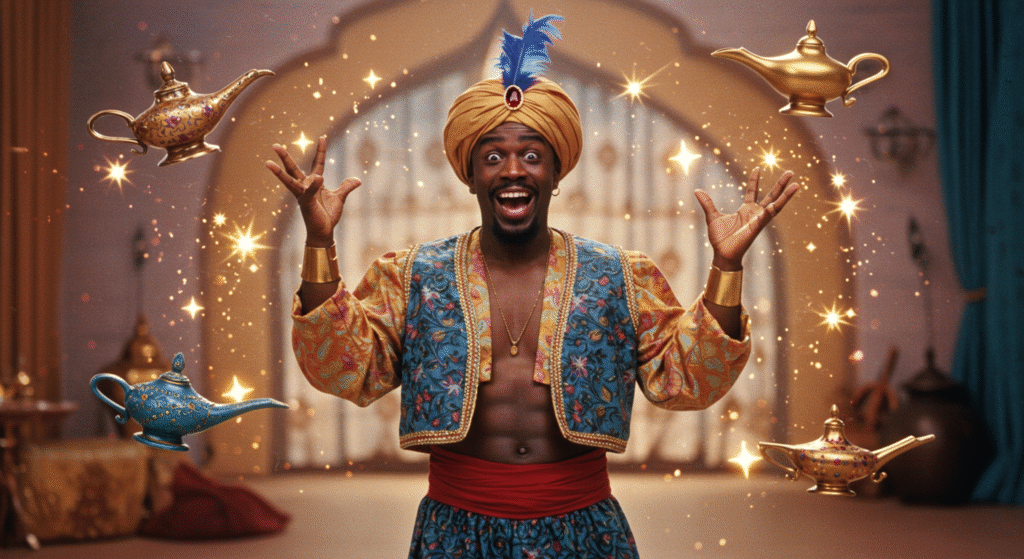
The short answer is no. Sinbad has never officially portrayed a genie in any theatrical release. The comedian himself has addressed these persistent rumors multiple times on social media, often with humor but also with clear denial.
Sinbad tweeted in 2016: “Have you noticed that only you people who grew up in the 1990s have seen this so-called Sinbad Genie movie? No one my age has.” The young mind!” This observation highlights a crucial pattern in Mandela Effect examples – the false memories often cluster around specific age groups and time periods.
The confusion likely stems from several sources. During the 1990s, Sinbad appeared in numerous family-friendly movies and TV shows, often wearing colorful, loose-fitting clothing that could be mistaken for genie attire. His comedic style and physical appearance made him a natural fit for the magical, wish-granting character that exists in people’s memories.
The Shazam vs. Kazaam Confusion
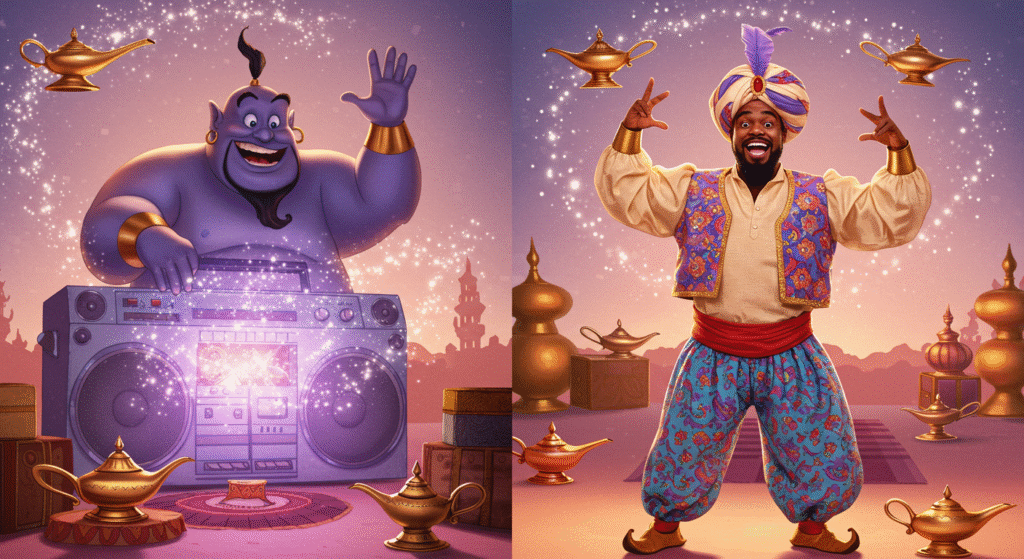
Most researchers attribute the Sinbad genie movie false memory to a case of mistaken identity with “Kazaam,” the 1996 film starring basketball legend Shaquille O’Neal as a genie. This explanation, while logical, doesn’t satisfy many believers who insist their memories are too detailed and specific to be simple confusion.
The Kazaam vs Shazam debate reveals fascinating aspects of how memory works. “Kazaam” featured a large, imposing genie emerging from a boombox to help a young boy. In contrast, the remembered “Shazam” movie featured Sinbad as a more comedic, approachable genie character. These stark differences make simple confusion seem unlikely to many believers.
Pop culture of the 1990s was saturated with genie-themed content. Disney’s “Aladdin” dominated theaters in 1992, while various TV shows and commercials featured genie characters. This cultural saturation created fertile ground for false memories to develop, especially among children who were the primary audience for these magical tales.
1990s Nostalgia and Memory Formation
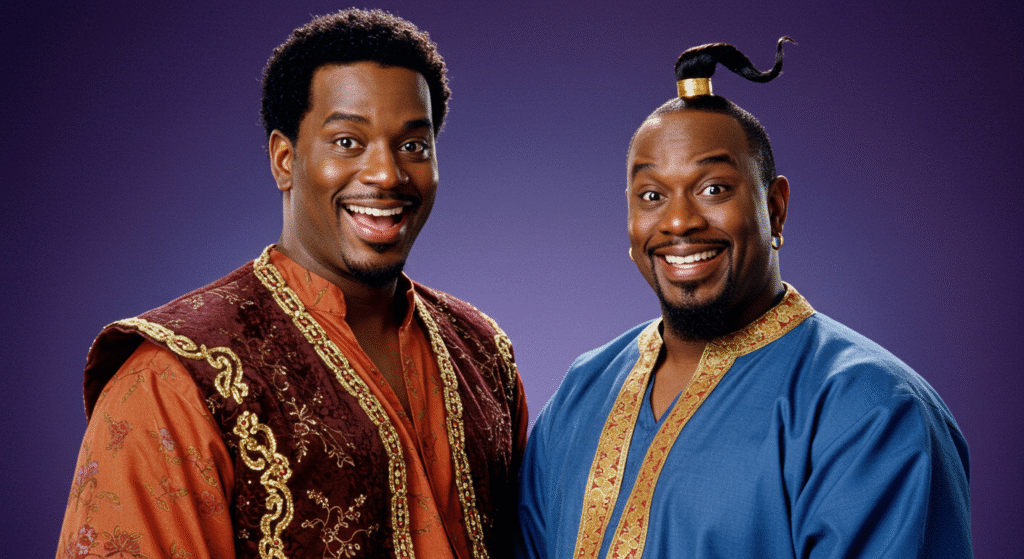
The decade holds special significance in the Sinbad genie movie mystery. The 1990s represented a golden age of family entertainment, with studios producing numerous high-concept comedies featuring beloved comedians in fantastical roles. Sinbad was particularly active during this period, starring in movies like “Houseguest” (1995) and “First Kid” (1996).
1990s nostalgia plays a crucial role in how these memories persist and spread. Adults who were children during this decade often have fuzzy but emotionally charged memories of the entertainment they consumed. When someone suggests they remember a Sinbad genie movie, others begin to “remember” it too, reinforcing the false memory through social validation.
The phenomenon demonstrates how suggestion and social reinforcement can create and strengthen false memories. When people discuss the supposed movie online, they often build upon each other’s “memories,” adding details and creating a more elaborate fictional narrative that feels increasingly real to participants.
The Power of Collective False Memory
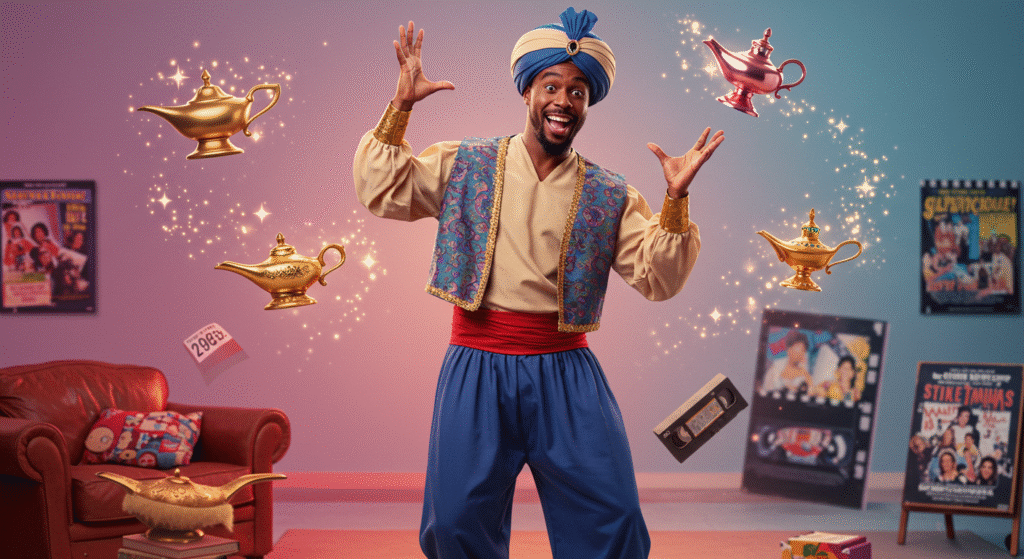
What makes the Sinbad genie movie case particularly intriguing is the consistency of details across different people’s false memories. Believers don’t just remember that the movie existed – they remember specific plot points, costume details, and even quotes from the film.
These shared false memories often include:
- Sinbad wearing a turban and baggy pants
- The movie having a comedic tone rather than the more serious approach of “Kazaam”
- Specific scenes involving wish-granting and magical mishaps
- The film being marketed alongside other family comedies of the era
The consistency suggests that false memories don’t form randomly. Instead, they appear to follow predictable patterns based on cultural expectations, existing knowledge, and logical assumptions about what such a movie would contain.
Reddit theories about the Sinbad genie movie range from the plausible to the paranormal. Some users suggest the movie was a made-for-TV special that was later scrubbed from existence due to legal issues. Others propose more exotic explanations involving parallel universes or time travel, though these theories lack supporting evidence.
The online discussion surrounding this false memory has created a feedback loop, where new participants encounter increasingly detailed “evidence” for the movie’s existence. This digital echo chamber effect demonstrates how false memories can be amplified and preserved in the internet age, potentially lasting far longer than they would in pre-digital times.
This section establishes the foundation for understanding one of the most perplexing examples of collective false memory in modern culture. The Sinbad genie movie phenomenon reveals how our memories can deceive us on a massive scale, creating shared experiences of events that never occurred.
Exploring the Depths of False Memory: When Pop Culture Creates Its Own Reality
The Science Behind Collective False Memories
The Sinbad genie movie phenomenon represents more than just a simple case of mistaken identity. It reveals the complex mechanisms behind how false memories form, spread, and become entrenched in popular culture. Psychologists have identified several factors that contribute to this type of collective memory distortion.
Memory reconstruction plays a fundamental role in these false memories. Every time we recall an event, our brain doesn’t simply replay a recorded file. Instead, it reconstructs the memory using available information, expectations, and contextual cues. This process makes memories malleable and susceptible to external influences.
The Mandela Effect mysteries often involve culturally significant events or beloved childhood memories. These emotionally charged recollections carry more weight in our minds, making them feel more “real” even when they’re inaccurate. The emotional connection to 1990s entertainment creates a perfect storm for false memory formation.
Research from Harvard University demonstrates that false memories can be implanted in laboratory settings within hours. When applied to pop culture phenomena, this research explains how suggestion and social validation can create seemingly authentic memories of events that never occurred. The Sinbad Shazam controversy exemplifies this process on a massive scale.
Breaking Down the Shazam vs. Kazaam Debate
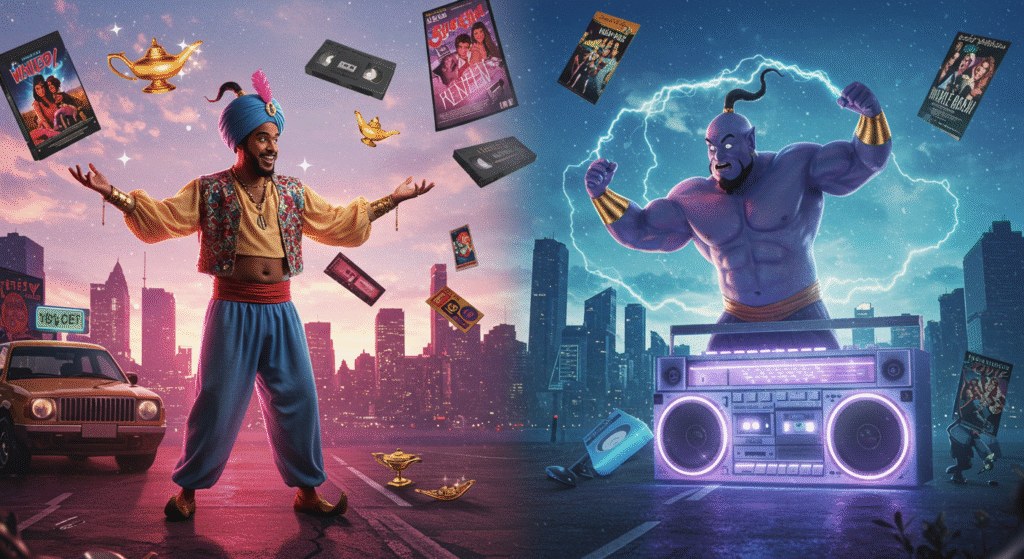
While many researchers point to confusion between Sinbad and Shaquille O’Neal as the root cause, believers in the Sinbad genie movie present compelling arguments against this explanation. They cite fundamental differences between their memories and the actual “Kazaam” film.
Kazaam featured several distinct elements that don’t match the remembered Sinbad film:
- Shaq’s intimidating physical presence versus Sinbad’s comedic approachability
- The urban setting of “Kazaam” contrasted with memories of more whimsical environments
- Different target demographics and marketing approaches
- Vastly different comedic styles between the two performers
These differences fuel the Kazaam vs Shazam debate among believers who insist their memories are too specific and detailed to result from simple confusion. Some argue that if false memory were the only explanation, we would expect more variation in people’s recollections rather than the remarkably consistent details that emerge across different accounts.
The timeline also presents interesting questions. Many people claim to remember the Sinbad genie movie appearing before “Kazaam” hit theaters in 1996. This temporal displacement suggests either a complete fabrication of chronology or the existence of an earlier, now-lost film that inspired later productions.
Reddit Theories and Online Communities
Reddit theories surrounding the missing Sinbad film have created vibrant online communities dedicated to solving this mystery. These digital spaces serve as laboratories for collective memory research, where thousands of people compare notes and attempt to piece together evidence.
The most prominent theories include:
The Lost Television Special Theory: Some Reddit users propose that Sinbad starred in a made-for-TV genie movie that was later pulled from circulation due to copyright issues or poor reception. This theory suggests the film existed but was systematically removed from public access.
The Mandela Effect Parallel Universe Theory: More speculative discussions involve parallel dimensions where the movie did exist. While scientifically unsupported, these theories highlight the profound confusion people feel when their memories contradict documented reality.
The Marketing Campaign Theory: Another explanation suggests that people remember elaborate marketing campaigns or trailers for a Sinbad genie movie that was ultimately never produced. Film studios often develop projects that never reach theaters, leaving behind promotional materials that could create false memories.
The Hansel and Gretel Connection: Recent theories point to the 2002 film “Hansel & Gretel,” which featured Howie Mandel in a magical role. Some Reddit users claim this movie, combined with Sinbad’s appearance in it, created the foundation for the false memory. However, this explanation fails to account for the specific 1990s timeframe most people associate with their memories.
Pop Culture Myths and Memory Contamination
The Sinbad genie movie belongs to a broader category of pop culture myths that demonstrate how collective false memories develop. These myths often involve beloved figures from childhood entertainment and share common characteristics:
Emotional Resonance: False memories tend to cluster around content that held emotional significance during formative years. The 1990s represented a golden age of family entertainment for many millennials, creating strong nostalgic connections.
Logical Plausibility: The false memories make sense within their cultural context. Given Sinbad’s career trajectory and the popularity of genie-themed entertainment, a Sinbad genie movie seems like something that should have existed.
Social Validation: When people discover others share their “memories,” it reinforces the belief that the events actually occurred. Online communities amplify this effect by bringing together large numbers of believers.
Detail Consistency: Genuine false memories often include consistent details across different people’s accounts, suggesting they follow predictable patterns rather than random fabrication.
The Role of 1990s Entertainment Culture
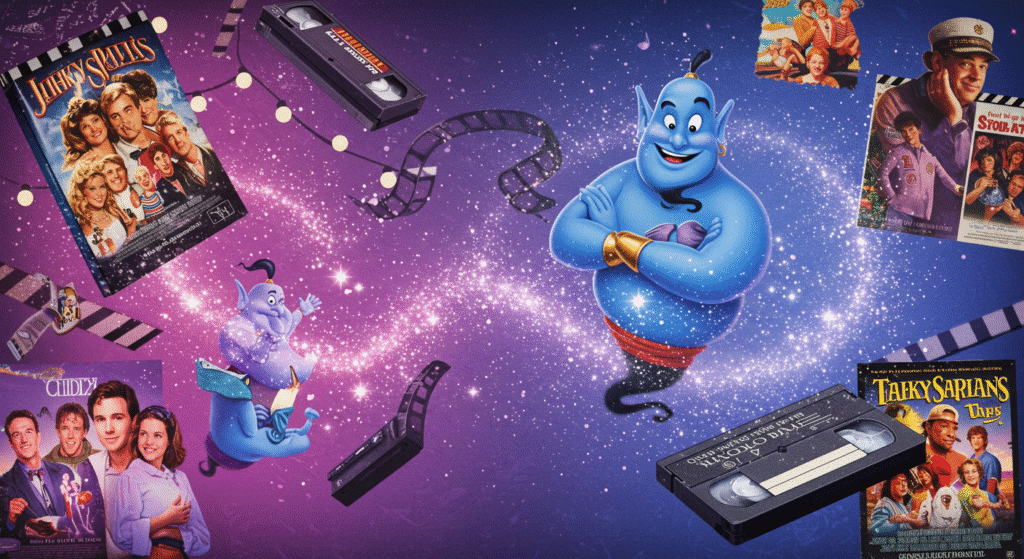
1990s nostalgia plays a crucial role in maintaining and spreading the Sinbad genie movie false memory. This decade produced numerous high-concept family comedies featuring comedians in fantastical situations. The entertainment landscape was ripe for the type of film people remember.
Consider the context of 1990s family entertainment:
- Disney’s “Aladdin” sparked widespread interest in genie stories
- Comedians like Robin Williams and Jim Carrey starred in magical, family-friendly films
- Studios frequently cast stand-up comedians in lead roles for family comedies
- The decade saw numerous “fish out of water” comedies featuring magical elements
Sinbad’s actual filmography during this period reinforces why the false memory seems plausible. Movies like “Houseguest” (1995) and “First Kid” (1996) established him as a family-friendly comedian capable of carrying high-concept premises. His comedic style and screen presence would have been perfect for a genie role.
Memory Contamination in the Digital Age
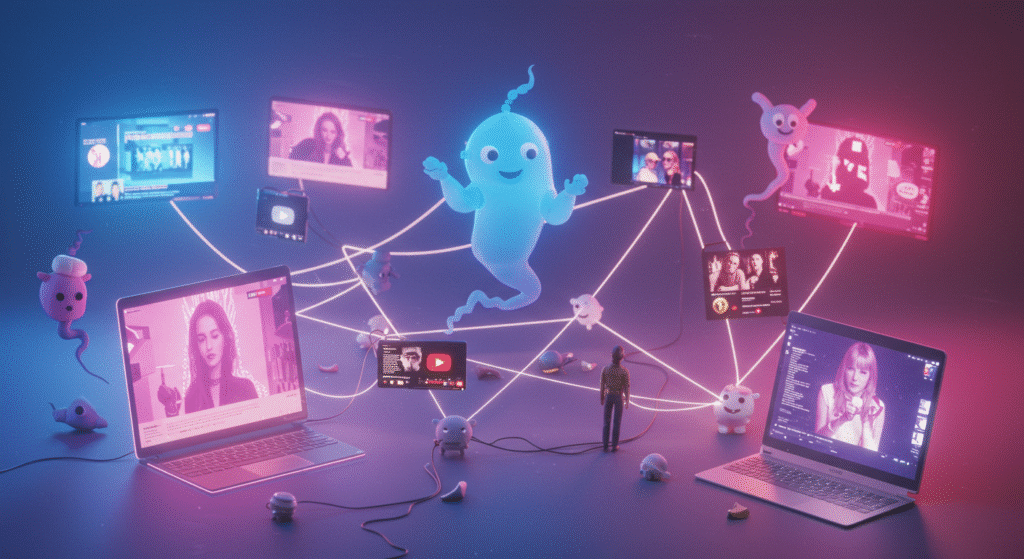
The internet has fundamentally changed how false memories spread and persist. Before widespread internet adoption, false memories would typically fade as people had limited opportunities to reinforce them through social interaction. Digital platforms create permanent repositories for these Mandela Effect examples, allowing them to survive and multiply across generations.
YouTube videos, Reddit threads, and social media posts about the Sinbad genie movie create a feedback loop. New people encounter increasingly detailed “evidence” for the film’s existence, while existing believers find validation through community support. This digital echo chamber effect can make false memories feel more real than actual memories.
The phenomenon demonstrates how technology can preserve and amplify human psychological quirks. What might have been a fleeting cultural confusion in the pre-digital era becomes a permanent part of internet folklore, complete with detailed documentation and passionate advocacy.
Cultural Impact and Psychological Implications
The Sinbad Shazam controversy extends beyond entertainment trivia to reveal important insights about human psychology and culture. It demonstrates how our memories can be unreliable narrators of our own experiences, even when we feel absolutely certain about their accuracy.
This realization has broader implications for how we understand truth, reality, and shared cultural experiences. If thousands of people can share identical false memories about a relatively trivial topic like a comedy movie, what does this suggest about more significant historical or cultural “memories”?
The phenomenon also highlights the social nature of memory formation. We don’t remember events in isolation but rather within cultural and social contexts that shape what we recall and how we recall it. The false memories surrounding this supposed film reveal how collective belief can create its own version of reality.
These insights prove particularly relevant in our current information landscape, where distinguishing between authentic and manufactured memories becomes increasingly challenging. The Sinbad genie movie case serves as a fascinating example of how human psychology interacts with popular culture to create enduring myths that feel more real than reality itself.
Why the Sinbad Genie Mystery Endures: The Psychology of Cultural Memory
The Persistence of False Collective Memories
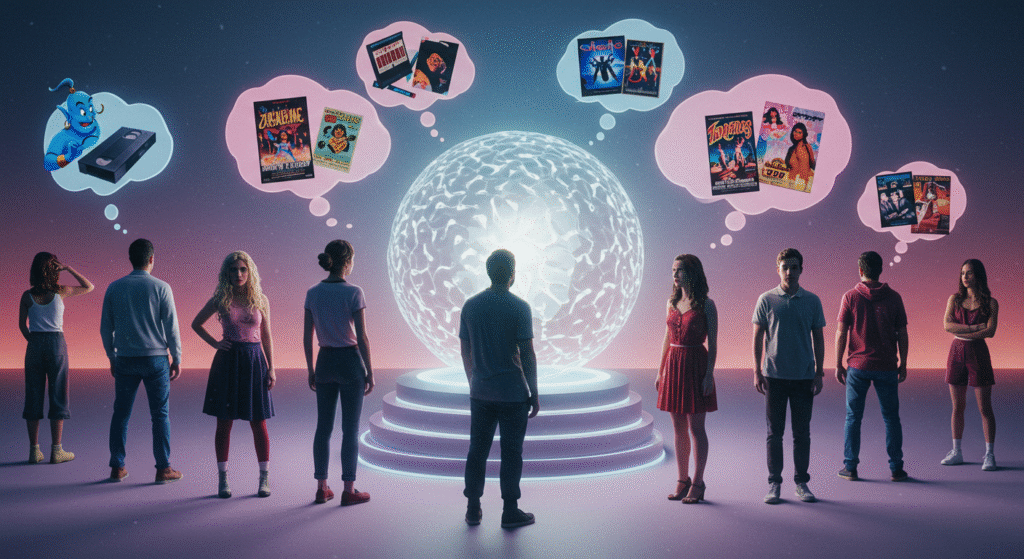
Despite overwhelming evidence that no Sinbad genie movie ever existed, believers remain steadfast in their convictions. This persistence reveals fascinating insights into how human memory works and why certain false memories prove virtually impossible to dislodge once they take root in popular consciousness.
The strength of these memory glitches in pop culture stems from several psychological mechanisms working in concert. Confirmation bias plays a significant role, as believers actively seek evidence supporting their memories while dismissing contradictory information. When confronted with the absence of the film, many people assume it must have been deliberately hidden or removed rather than accepting they might be mistaken.
Cognitive dissonance also reinforces these false memories. The disconnect between vivid personal recollections and documented reality creates psychological tension. Rather than accepting that their memories are flawed, many people find it easier to believe in elaborate cover-ups or supernatural explanations. This mental defense mechanism protects self-image and confidence in personal memory.
The social aspect cannot be understated. When thousands of people share identical false memories, it creates a powerful sense of validation. The Sinbad genie hoax demonstrates how collective belief can feel more compelling than individual doubt. Social media platforms amplify this effect by connecting believers worldwide, creating echo chambers that reinforce false memories through repetition and shared conviction.
Cultural Implications of the Mandela Effect
The Sinbad genie movie phenomenon reflects broader changes in how we process and validate information in the digital age. Traditional gatekeepers of cultural memory – libraries, archives, and media organizations – compete with crowdsourced “knowledge” that may lack factual basis but carries emotional weight and social validation.
This shift has profound implications for society’s relationship with truth and historical accuracy. When large groups can maintain false beliefs despite contradictory evidence, it challenges fundamental assumptions about shared reality and objective truth. The Mandela Effect explained through the Sinbad case reveals how subjective experiences can override factual evidence in collective memory formation.
The phenomenon also highlights generational differences in memory formation and information processing. People who were children in the 1990s experienced entertainment differently than adults, creating more malleable memories that could be influenced by suggestion and cultural expectations. This age-specific clustering of false memories suggests that childhood experiences may be particularly vulnerable to later revision.
Educational institutions face new challenges in teaching critical thinking and media literacy when false memories can feel more real than documented history. The Sinbad genie movie case serves as a perfect example of why students need tools to distinguish between personal conviction and verifiable fact.
The Economics of Nostalgia and False Memory
1990s nostalgia has become a powerful economic force, driving everything from fashion trends to entertainment reboots. The supposed Sinbad genie movie represents the ultimate nostalgia product – a beloved childhood memory that never existed but feels more authentic than actual films from the era.
This economic dimension explains why false memories about entertainment properties prove so persistent. Companies can’t capitalize on non-existent products, but the cultural demand for the “lost” Sinbad film demonstrates untapped market potential. Some entrepreneurs have even created parody versions or tribute films, attempting to fulfill the collective false memory.
The phenomenon reveals how consumer culture and memory formation intersect in unexpected ways. Marketing messages, promotional campaigns, and cultural expectations can create memories of products that were never released. The entertainment industry’s practice of announcing projects that never materialize may contribute to these false memories by planting seeds of expectation that later bloom into “recollections.”
Streaming platforms and digital archives face unique challenges in addressing these false memories. When users search for the Sinbad genie movie, algorithms must navigate between providing accurate information and satisfying user intent. The challenge becomes more complex when false memories generate significant search volume and social media engagement.
When Did Sinbad Dress Up as a Genie?
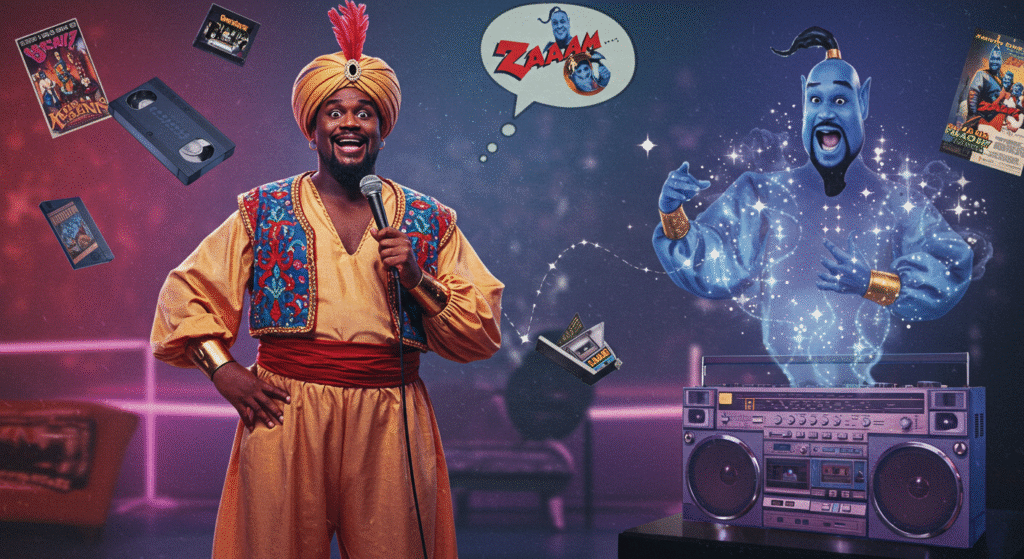
This frequently searched question reveals another layer of the mystery. Sinbad has indeed appeared in genie-like costumes for various promotional events, comedy sketches, and public appearances throughout his career. These authentic instances of Sinbad in genie attire may have contributed to the false memory formation.Comedy shows, award ceremonies, and promotional events from the 1990s occasionally featured Sinbad in Middle Eastern-inspired costumes that could be remembered as genie outfits. Without the context of these specific appearances, childhood memories might have reconstructed these images as scenes from a feature film.
The comedian’s natural charisma and physical comedy skills made him a perfect candidate for genie-themed promotional content. Television appearances, magazine photo shoots, and live performances may have included genie references that later became confused with memories of an actual movie.
This confusion between promotional content and feature films highlights how media saturation can blur the lines between different types of entertainment experiences. Children of the 1990s consumed content across multiple platforms and formats, making it difficult to distinguish between various sources of Sinbad-related genie imagery.
The Shaq Connection: What Movie is Shaq a Genie In?
The authentic answer to this question – “Kazaam” (1996) – provides crucial context for understanding the false memory phenomenon. Shaquille O’Neal’s portrayal of a genie created a real cultural touchstone that may have influenced the formation of false memories about Sinbad.
Pop culture myths often emerge when reality fails to match expectations or cultural preferences. Many people found Shaq’s intimidating, urban genie less appealing than the comedic, family-friendly version they imagined Sinbad might have portrayed. This preference may have unconsciously created alternative memories that better matched their entertainment desires.
The marketing and reception of “Kazaam” also play important roles. The film received poor reviews and modest box office performance, making it a forgettable experience for many viewers. In contrast, the imagined Sinbad version represents an idealized version of what a 1990s genie comedy could have been.
This comparison reveals how false memories can serve as cultural wish fulfillment. When reality disappoints, our minds may unconsciously construct alternative versions that better match our preferences and expectations. The Sinbad genie movie represents the genie film people wished they had seen rather than the one they actually watched.
Digital Archaeology and the Search for Truth
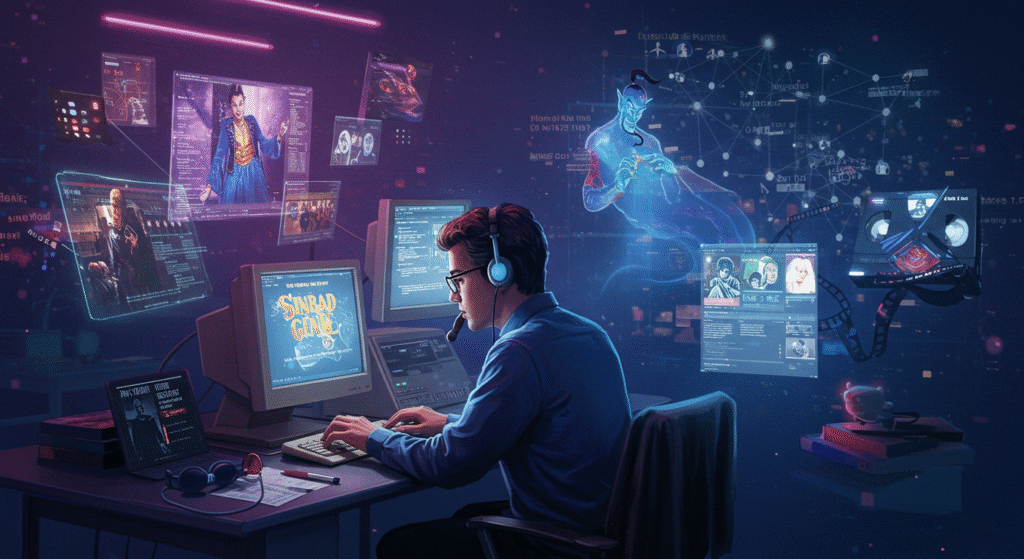
Modern attempts to debunk the Sinbad genie hoax face unique challenges in the digital age. Unlike previous eras, where the absence of evidence might be attributed to poor record-keeping, today’s comprehensive digital archives make the film’s non-existence more definitive yet somehow less convincing to believers.
Internet sleuths have conducted exhaustive searches through film databases, copyright records, and industry publications without finding any trace of the supposed movie. These investigations demonstrate the thoroughness possible with digital research tools while highlighting the persistence of false memories despite overwhelming contrary evidence.
The phenomenon has inspired a cottage industry of content creators producing videos, articles, and podcasts exploring the mystery. This meta-commentary creates additional layers of cultural memory, where discussions about the false memory become part of the cultural landscape itself.
Some investigators have attempted to trace the false memory to its origins, identifying early internet discussions and analyzing how the myth spread through online communities. These digital archaeology efforts provide valuable insights into how false memories propagate in networked societies.
Lessons for the Information Age
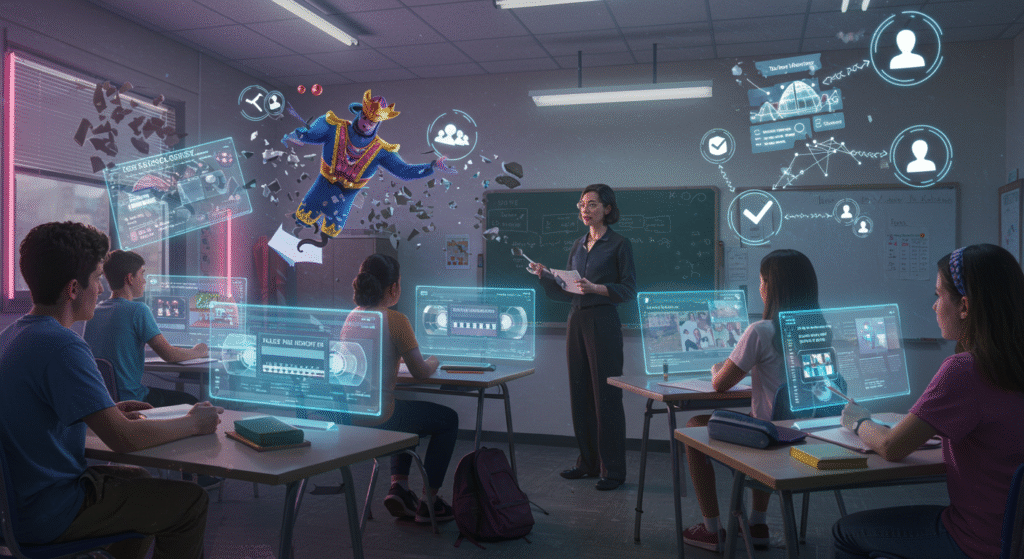
The Sinbad genie movie case offers crucial lessons for navigating truth in the digital era. It demonstrates how collective conviction can override factual evidence and why critical thinking skills remain essential despite increased access to information.
Educational institutions can use this case study to teach students about memory reliability, source verification, and the difference between personal experience and documented fact. The phenomenon provides a non-threatening way to discuss how our minds can deceive us without challenging more sensitive beliefs or memories.
Media literacy programs can incorporate discussions of false memories to help students understand why multiple sources and primary evidence remain important even when personal conviction feels absolute. The case illustrates why emotional investment in particular outcomes can compromise objective analysis.
The phenomenon also highlights the importance of preserving accurate historical records and maintaining professional archival standards. As digital platforms become primary sources of cultural memory, ensuring accuracy and completeness becomes increasingly critical for future generations.
Final Thoughts
The Sinbad genie movie mystery reveals fundamental truths about human nature and collective memory formation. While the film never existed, the shared experience of “remembering” it has created genuine cultural significance. These memory glitches in pop culture demonstrate that sometimes the stories we tell ourselves can become more powerful than the facts they replace.
This phenomenon reminds us that memory is not a perfect recording device but rather a creative, reconstructive process influenced by emotion, expectation, and social validation. Understanding these limitations doesn’t diminish the value of personal experience but rather helps us navigate the complex relationship between subjective reality and objective truth.
The Mandela Effect explained through cases like this one provides valuable insights into human psychology and social dynamics. As we continue to grapple with questions of truth and reality in an increasingly complex information landscape, these lessons become more relevant than ever.
Perhaps most importantly, the Sinbad genie movie story teaches us that shared cultural experiences – even false ones – can bring people together and create meaningful connections. While we should strive for factual accuracy, we can also appreciate the human need for story, community, and shared wonder that drives these fascinating psychological phenomena.
The mystery may never be fully resolved for all believers, but its exploration has enriched our understanding of memory, culture, and the powerful human desire to make sense of our experiences through narrative. In that sense, the non-existent Sinbad genie movie has achieved something many real films never accomplish – it has become a genuinely significant cultural touchstone that continues to teach us about ourselves.
FAQS: Frequently Asked Questions
Q: Has Sinbad ever played a genie in a movie?
A: No, Sinbad has never officially played a genie in any theatrical release or television movie. Despite thousands of people claiming to remember such a film, no evidence exists of a sinbad genie movie in his filmography. The comedian has addressed these persistent rumors multiple times, confirming he never starred in a genie role during the 1990s or any other period.
Q: Is Shazaam with Sinbad a real movie?
A: No, “Shazaam” starring Sinbad is not a real movie. This is one of the most famous examples of the Mandela Effect, where large groups of people share identical false memories. While many people vividly remember watching this sinbad genie movie, it never existed. The confusion likely stems from Shaquille O’Neal’s 1996 film “Kazaam,” where he played a genie.
Q: When did Sinbad dress up as a genie?
A: Sinbad has appeared in genie-like costumes for various promotional events, comedy sketches, and public appearances throughout his career, but never for a feature film. These authentic instances of Sinbad in Middle Eastern-inspired attire may have contributed to the false memory formation. He also created a parody video for College Humor in 2017 specifically addressing the persistent rumors about the sinbad genie movie.
Q: What is the Mandela Effect and how does it relate to Sinbad?
A: The Mandela Effect is a psychological phenomenon where large groups of people share identical false memories. It’s named after widespread false memories of Nelson Mandela dying in prison during the 1980s. The Sinbad genie movie represents one of the most documented cases, demonstrating how collective false memories can feel incredibly real even when no supporting evidence exists.
Q: Why do so many people remember the same nonexistent movie?
A: Multiple psychological factors contribute to this shared false memory. Memory reconstruction, 1990s nostalgia, cultural expectations, and social validation all play roles. The entertainment landscape of the 1990s, filled with genie-themed content and family comedies starring comedians, created perfect conditions for this type of false memory to develop and persist.
Q: What are other common Mandela Effect examples?
A: Popular Mandela Effect examples include the Berenstein vs. Berenstain Bears spelling controversy, misremembering the Monopoly man having a monocle, and believing Pikachu’s tail has a black tip. These false memories often involve beloved childhood content and demonstrate how our brains can create vivid recollections of events that never occurred.
Q: What movie is Shaq a genie in?
A: Shaquille O’Neal played a genie in “Kazaam” (1996). This film featured Shaq as an intimidating, urban genie who emerges from a boombox to help a young boy. Many researchers believe confusion between Shaq’s “Kazaam” and false memories of a Sinbad genie film explains the persistent Mandela Effect surrounding the sinbad genie movie.
Q: How is the remembered Sinbad movie different from Kazaam?
A: People who claim to remember the Sinbad film describe it as more comedic and family-friendly than “Kazaam.” They recall Sinbad as an approachable, humorous genie rather than Shaq’s imposing character. The remembered film supposedly had a lighter tone, different setting, and completely different comedic style, making simple confusion seem unlikely to believers.
Q: Could people be confusing other movies with the Sinbad genie film?
A: Some theories suggest confusion with other films like the 2002 “Hansel & Gretel” featuring Howie Mandel in a magical role, or various promotional materials from the 1990s. However, these explanations don’t fully account for the specific details and 1990s timeframe most people associate with their memories of the Sinbad Genie movie.
Q: Why won’t this false memory go away despite the evidence?
A: The persistence stems from psychological mechanisms including confirmation bias, cognitive dissonance, and social validation. When thousands of people share the same false memory, it creates a powerful collective conviction that can override factual evidence. Digital platforms amplify this effect by connecting believers worldwide and preserving detailed discussions about the nonexistent film.
Q: What does this phenomenon teach us about memory?
A: The Sinbad genie movie case demonstrates that memory is not a perfect recording device but rather a reconstructive process influenced by emotion, expectation, and social context. It shows how childhood memories can be particularly malleable and how cultural factors can shape what we remember, even creating vivid recollections of events that never occurred.
Q: How common are false memories in pop culture?
A: Pop culture myths and false memories are more common than many realize, especially regarding childhood entertainment. The digital age has made these phenomena more visible and persistent, as online communities can preserve and amplify false memories that might have faded in pre-Internet times. The entertainment industry’s practice of announcing unreleased projects may also contribute to these memory distortions.